
If you've been around product long enough, you've lived through the integration tax. Every new tool your product needs to talk to requires a custom integration: a bespoke API connection, maintained by your team, that breaks every time the other side changes something. Multiply that by a dozen data sources and you've got an engineering team spending half its time on plumbing instead of product.
Model Context Protocol, or MCP, is trying to end that cycle for AI. And if you're a PM building anything with language models, agents, or AI-powered features, this is worth paying attention to.
MCP in plain language
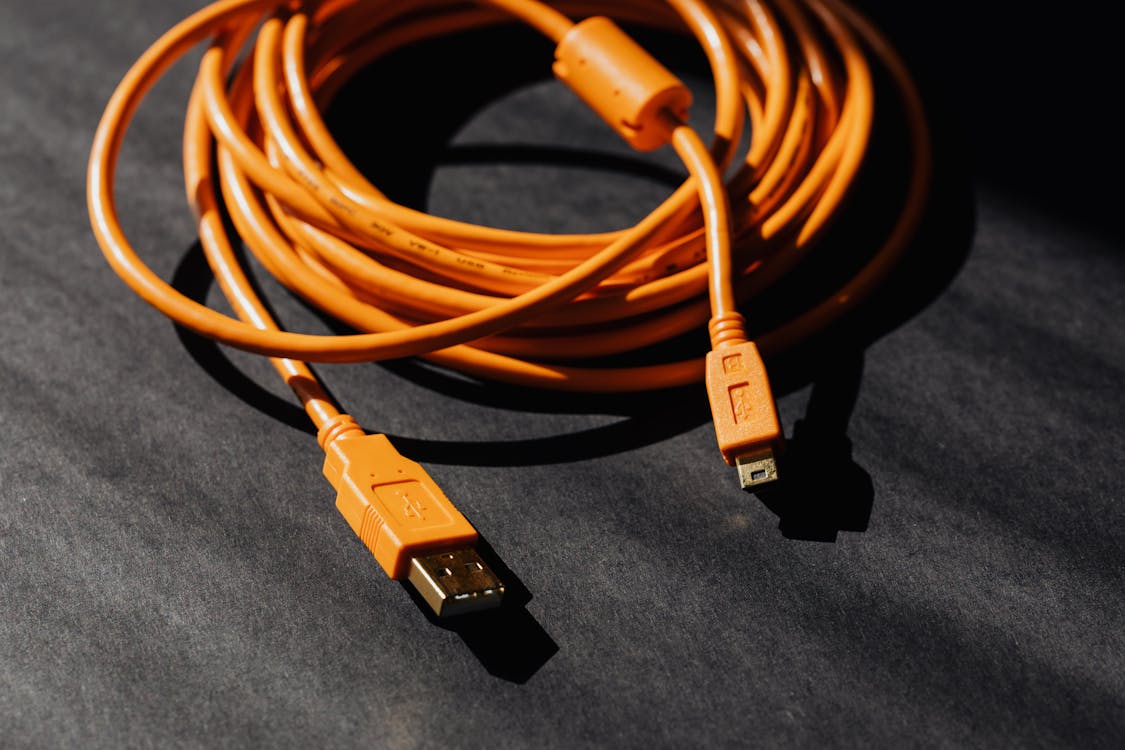
Anthropic introduced MCP in November 2024 as an open standard for connecting AI systems to external tools and data sources. The simplest analogy: MCP is to AI integrations what USB-C is to charging cables. Instead of building a custom connector for every tool your AI needs to access, you build one MCP integration, and it works with any MCP-compatible AI system.
Technically, MCP defines a standard way for an AI model to discover what tools are available, understand what each tool does, call those tools, and receive structured results. It's a protocol, not a product. Any AI system can implement it, any tool can expose its capabilities through it, and the two sides don't need to know anything about each other's implementation.
Why this matters now
The adoption has been remarkably fast. OpenAI officially adopted MCP in March 2025, integrating it across the ChatGPT desktop app, the Agents SDK, and the Responses API. Anthropic's Claude already supports it natively. Developer tools like Cursor and VS Code have built-in MCP support. The ecosystem is expanding rapidly.
What's unusual about MCP is that competing companies are converging on a shared standard. OpenAI and Anthropic don't agree on much, but they agree that a universal protocol for AI-to-tool communication is better for everyone than a fragmented landscape of proprietary integrations. That convergence signals that MCP has a real shot at becoming the default.
Why PMs should care
If you're a PM building AI features, MCP changes your integration calculus in three ways.
It reduces the cost of connecting to external tools. Instead of building and maintaining N custom integrations, your team builds one MCP client. Every MCP-compatible tool becomes available with minimal additional work. That's a meaningful reduction in engineering overhead, especially for products that need to pull context from multiple data sources (CRMs, docs, databases, APIs).
It makes your product more extensible. If your product exposes its capabilities via MCP, any AI system can interact with it. That turns your product from a standalone tool into a building block in someone else's AI workflow. For platform products, that's a significant distribution opportunity.
It shapes the agentic future. AI agents need to interact with the real world: booking flights, querying databases, filing tickets, updating spreadsheets. MCP provides the standard interface for those interactions. If you're building agent-powered features (and in 2025, you probably should be), MCP is the infrastructure layer that makes it practical.
What to watch
MCP is early. The standard is evolving. There are open questions about security (what permissions should an AI agent have when accessing external tools?), authentication (how do you handle OAuth flows through an MCP connection?), and governance (who decides what the standard becomes?). These aren't deal-breakers, but they're worth tracking.
The bigger question is whether MCP achieves the kind of ubiquity that makes it invisible, the way HTTP became invisible. If it does, the AI integration landscape simplifies dramatically. If it fragments (competing standards from different vendors), we're back to the custom integration tax.
My bet: MCP wins. The incentive alignment is too strong. Developers don't want to build twelve integrations. AI companies don't want to maintain twelve connectors. Tool providers don't want to be left out of the AI ecosystem. A shared standard serves everyone, and the early adoption from both OpenAI and Anthropic gives it critical mass.
The PM takeaway
You don't need to understand the protocol spec. You do need to understand the strategic implications. MCP is making it cheaper and faster to connect AI to everything, and the products that lean into that connectivity early will have a compounding advantage over those that stay siloed.
If USB-C taught us anything, it's that standards win slowly and then all at once. MCP is in the "slowly" phase. But the "all at once" is coming.